

Soil Testing Sunshine Coast and Gympie
August 31, 2023
Wind Classification - A Guide to AS 4055:2021 for Residential Building Sites
When planning a new home, there are many different site investigations and reports that may be required before construction can begin. Most people are familiar with soil testing, but another important consideration for residential building design is Wind Classification.
Wind affects every building site differently. The location of the property, surrounding terrain, nearby buildings, vegetation and the shape of the land can all influence the wind conditions that need to be considered during structural design.
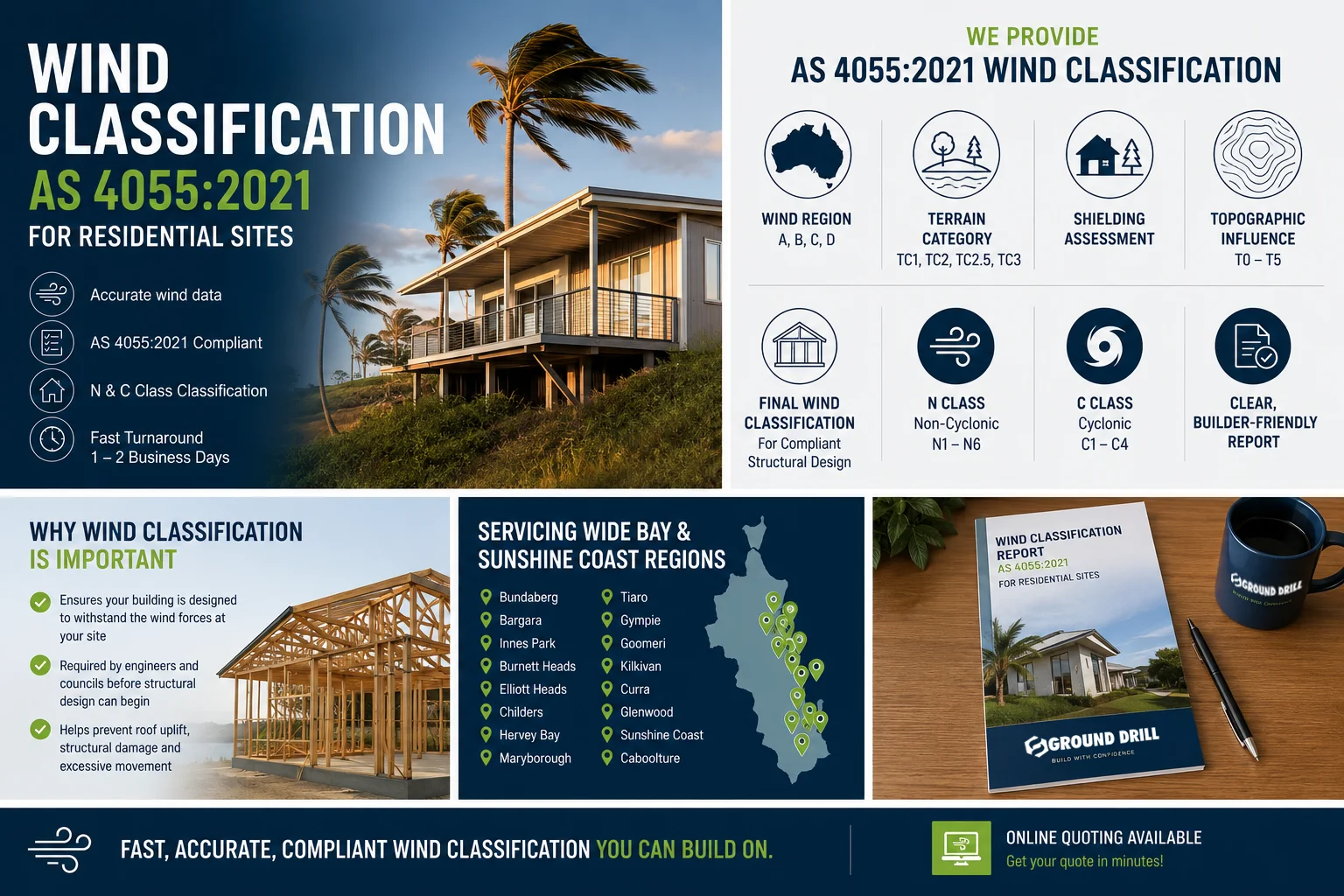
At Ground Drill, we provide Wind Classification assessments in accordance with AS 4055:2021 – Wind Loads for Housing throughout Bundaberg, Childers, Hervey Bay, Maryborough, Gympie, the Sunshine Coast, Caboolture and surrounding areas.
What is Wind Classification?
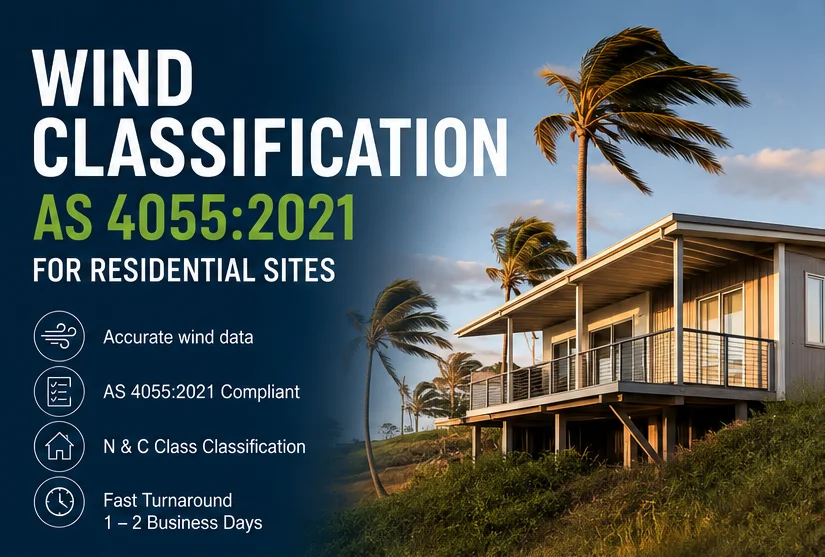
Wind Classification is the process of determining the wind conditions that apply to a residential building site.
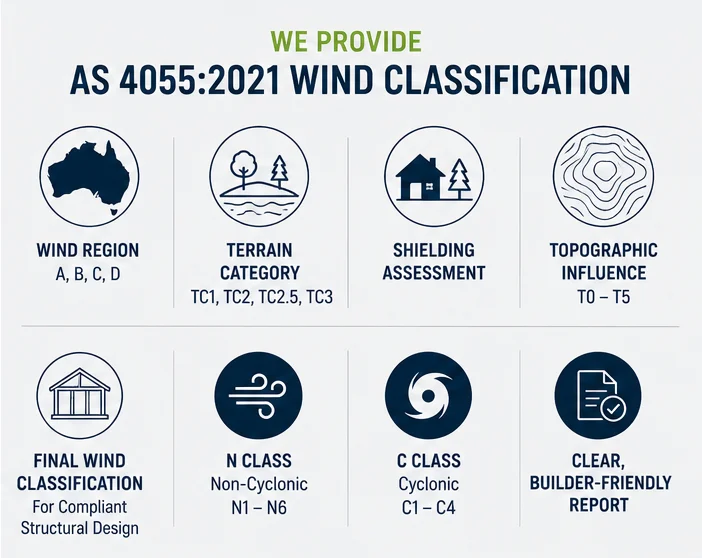
Under AS 4055:2021, the site is assessed using a number of factors, including the applicable Wind Region, Terrain Category, Shielding and Topographic influence.
These factors are then used to establish the appropriate wind classification for the site.
The final result is generally expressed as an N Class or C Class.
N Classes relate to non-cyclonic wind regions, while C Classes relate to cyclonic wind regions. AS 4055:2021 includes classifications from N1 through to N6 and C1 through to C4.
The classification is then used as an important input into the structural design of the building.
Why Does Wind Classification Matter?
A building needs to be designed to withstand the wind forces that can reasonably be expected at its location.
Wind can create forces on roofs, walls, windows, doors, connections and other structural components. Roof uplift is one example of the forces that structural design needs to account for.
Having the correct Wind Classification gives the structural engineer or building designer the information required to consider the site's wind conditions as part of the structural design.
AS 4055:2021 is referenced by the Australian Building Codes Board as a standard for wind actions for housing.
Getting the information early can also help keep the design and approval process moving.
What is the Difference Between Wind Classification and Wind Loading?
The terms Wind Classification and Wind Loading are often used when discussing residential construction, but they are not exactly the same thing.
Wind Classification identifies the wind class applicable to the site under the relevant standard.
Wind loading refers more broadly to the forces that wind applies to a building and the calculations used during structural design.
AS 4055:2021 provides a simplified method for determining wind classifications for housing within the scope of the standard. For projects outside its scope or geometric limits, a more detailed assessment under AS/NZS 1170.2:2021 – Structural design actions – Wind actions may be required.
Ground Drill provides AS 4055:2021 Wind Classification and does not provide AS/NZS 1170.2:2021 wind assessments.
What Factors Determine Wind Classification?
There are several important factors involved in determining the Wind Classification of a residential site.
- Wind Region
Australia is divided into different wind regions according to expected wind conditions. The applicable Wind Region is the starting point for determining the site's wind classification. Depending on the region and other site conditions, the final classification may fall within the N or C classification ranges.This is why simply knowing the suburb or local area is not always enough to determine the final Wind Classification.
- Terrain Category
The surrounding environment can have a significant effect on wind. A house located in an open area will be exposed differently from a house surrounded by established development.
AS 4055:2021 uses Terrain Categories TC1, TC2, TC2.5 and TC3 to account for different levels of surrounding terrain and development. When assessing a site, the surrounding area therefore needs to be considered rather than looking only at the individual building block.
- Shielding
Shielding is another factor that can affect the Wind Classification. Nearby houses, buildings and other obstructions can provide a degree of protection from wind. An established suburban area, for example, may provide different conditions from a new house being built on an exposed acreage property.
AS 4055:2021 includes provisions for assessing shielding as part of determining the site's wind classification. This is one reason why two properties in the same general area may not necessarily have identical wind conditions.
- Topographic Influence
The shape of the land also needs to be considered. A building on relatively flat land may experience different wind conditions from one located on or near a significant slope, ridge or other elevated terrain.
AS 4055:2021 uses topographic classifications from T0 to T5 to account for the effect of rising ground on wind conditions. This assessment helps ensure the final Wind Classification reflects the characteristics of the actual site.
Who Needs a Wind Classification?
Wind Classification can be required as part of the design and approval process for a residential building. Our service is suitable for:
- Builders
- Building designers
- Architects
- Structural engineers
- Owners
- Owner-builders
Builders and design professionals may request a Wind Classification early in the project so that the structural design can be completed using the correct site information. For owners and owner-builders, obtaining the information early can help ensure the appropriate reports are available when they are required by the design or approval team.
Does Wind Classification Replace Structural Engineering?
No.
A Wind Classification provides important site information, but it does not replace structural engineering.
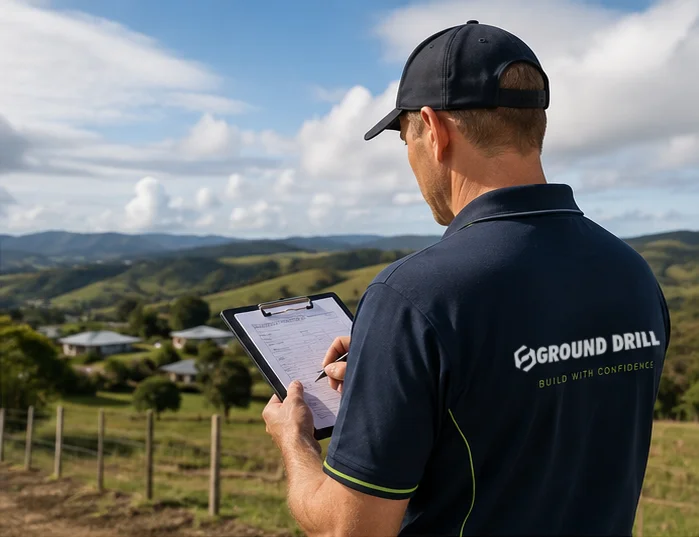
Ground Drill assesses the relevant site factors and provides the resulting Wind Classification information in a clear report. The structural engineer or appropriately qualified designer then uses that information as part of the structural design.
It is important to make sure the correct assessment method is being used for the type and size of building being designed.
How Long Does Wind Classification Take?
At Ground Drill, our typical turnaround for a Wind Classification is 1–2 business days.
We understand that builders and designers often work to tight construction and design schedules, so our aim is to provide accurate information and a practical service without unnecessary delays.
Wind Classification Across South East Queensland
Ground Drill provides Wind Classification services across a wide area of South East Queensland, including: Bundaberg, Bargara, Innes Park, Burnett Heads, Elliott Heads, Childers, Hervey Bay, Maryborough, Tiaro, Gympie, Goomeri, Kilkivan, Curra, Glenwood, the Sunshine Coast and Caboolture. Surrounding areas may also be available on request.
Get Your Wind Classification From Ground Drill
Wind is an important part of residential building design, and having the correct site information can help keep your project moving. Ground Drill provides Wind Classification in accordance with AS 4055:2021 with a typical turnaround of 1–2 business days. If your builder, designer, engineer or certifier has requested a Wind Classification, Ground Drill can provide the assessment and a clear, practical report.