
Wind Classification for Residential Sites
AS 4055:2021 Wind Classification Across South East Queensland

Wind Classification
Wind Classification assessments for residential building sites in accordance with AS 4055:2021 – Wind Loads for Housing.
Our assessments determine the site information required to establish the appropriate wind classification, including the Wind Region, Terrain Category, Shielding and Topographic influence. The assessment results in the applicable N Class or C Class wind classification.
A clear wind classification report provides important information for builders, designers, architects and structural engineers when progressing the structural design of a residential building.
Ground Drill provides Wind Classification services throughout Bundaberg, Childers, Hervey Bay, Maryborough, Gympie, the Sunshine Coast and Caboolture, as well as surrounding areas.
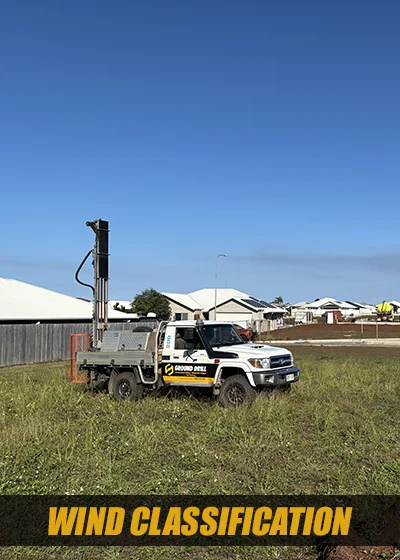
What is Wind Classification?
Wind Classification is the process of determining the wind conditions that apply to a particular residential building site.
Under AS 4055:2021 – Wind Loads for Housing, a number of site factors are considered to establish the appropriate wind classification. These include the site's wind region, surrounding terrain, shielding from nearby structures or vegetation and the effect of topography.
The final classification is generally expressed as an N Class for non-cyclonic conditions or a C Class for cyclonic conditions. The classification provides an important input into the structural design of applicable residential buildings.
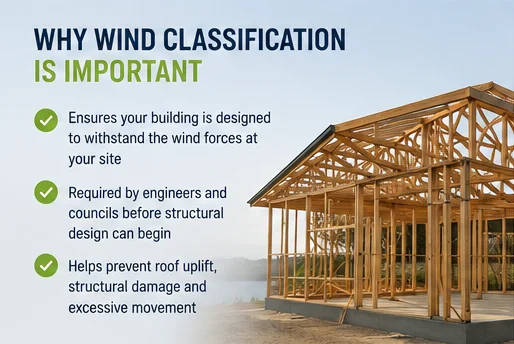
Why is Wind Classification Important?
Wind can place significant forces on a building, particularly on roofs, walls, connections and other structural components.
A correct Wind Classification allows the structural designer or engineer to account for the wind conditions applicable to the site when completing the building's structural design. The Australian Building Codes Board recognises AS 4055:2021 as a referenced standard for wind actions for housing.
Providing the correct site information early in the design process can help avoid delays and the need to revise structural details later.
Ground Drill provides a straightforward report that gives builders and design professionals the information they need to progress their project.
Wind Classification and Structural Engineering
A Wind Classification is an important input into structural design, but it is not a replacement for structural engineering.
Ground Drill provides the site Wind Classification information. The structural engineer or appropriately qualified designer uses that information when determining the structural requirements of the building.
Fast, Practical Wind Classification Reports
Ground Drill understands that construction projects often work to tight timeframes. We provide a straightforward service designed to give builders and design professionals the information they need without unnecessary delays.
AS 4055:2021
What Does Ground Drill Assess?
Our AS 4055:2021 Wind Classification service considers the key site factors required to determine the applicable wind classification.
Wind Region
Australia is divided into different wind regions based on the expected wind conditions.
Wind Regions A and B are generally associated with non-cyclonic classifications, while Regions C and D are associated with cyclonic classifications.
The applicable region forms part of the process used to determine the final wind class for a residential site.
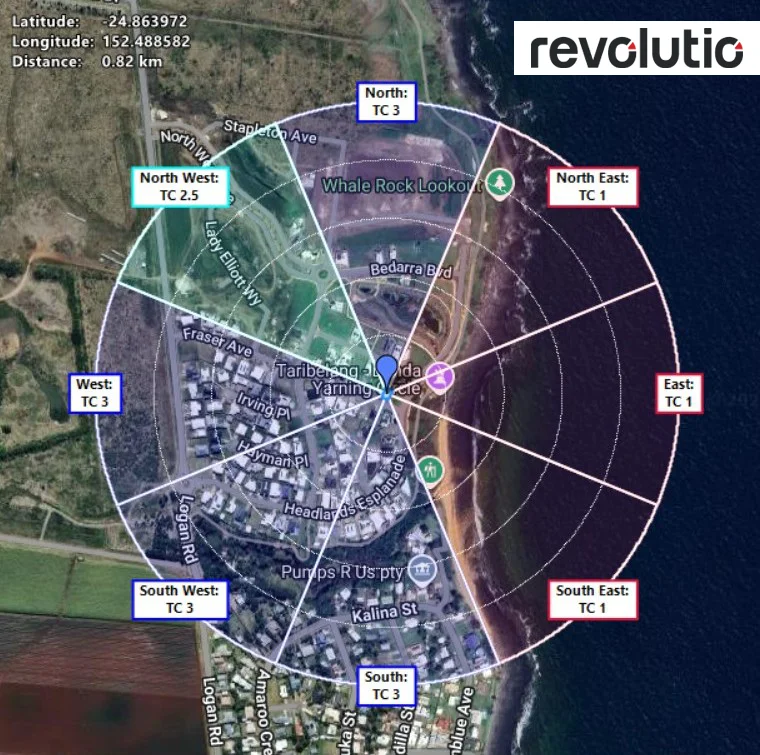
Terrain Category for Wind Classification created and calculated using CHECKWIND by Revolutio.
Terrain Category
The surrounding terrain can affect the wind experienced by a building.
AS 4055:2021 uses terrain categories including TC1, TC2, TC2.5 and TC3. These categories account for differences between more open environments and areas with greater levels of development or obstruction.
The terrain surrounding a building site is therefore an important part of determining the site's wind classification.
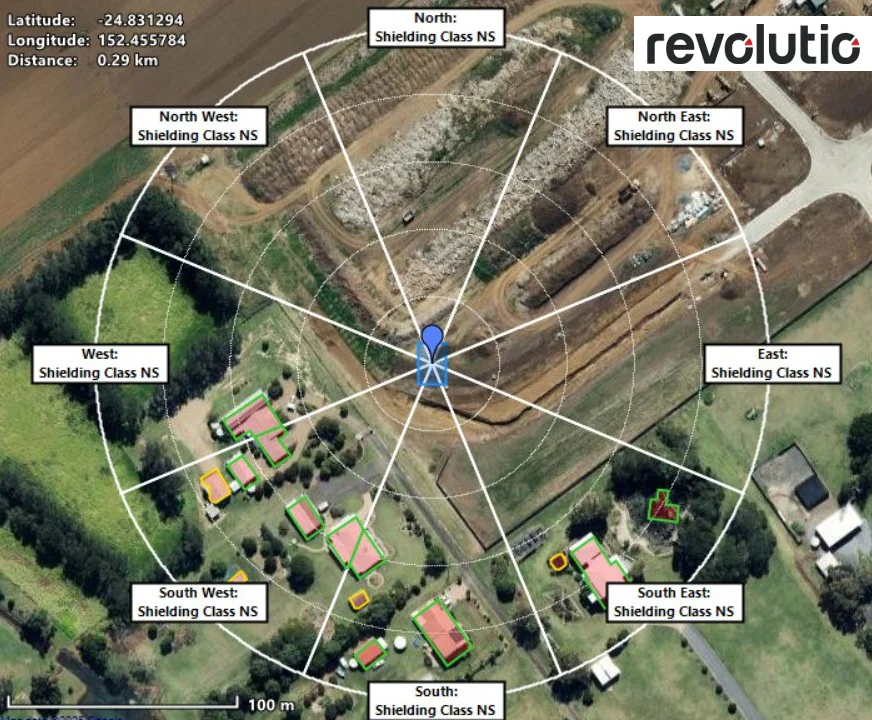
Shielding for Wind Classification created and calculated using CHECKWIND by Revolutio.
Shielding
Shielding considers the effect nearby buildings, structures and other obstructions can have on wind conditions at the proposed building site.
For example, a building located within an established residential area may experience different wind conditions from a similar building located on an exposed site surrounded by open land.
Shielding is assessed as part of the AS 4055:2021 wind classification process.
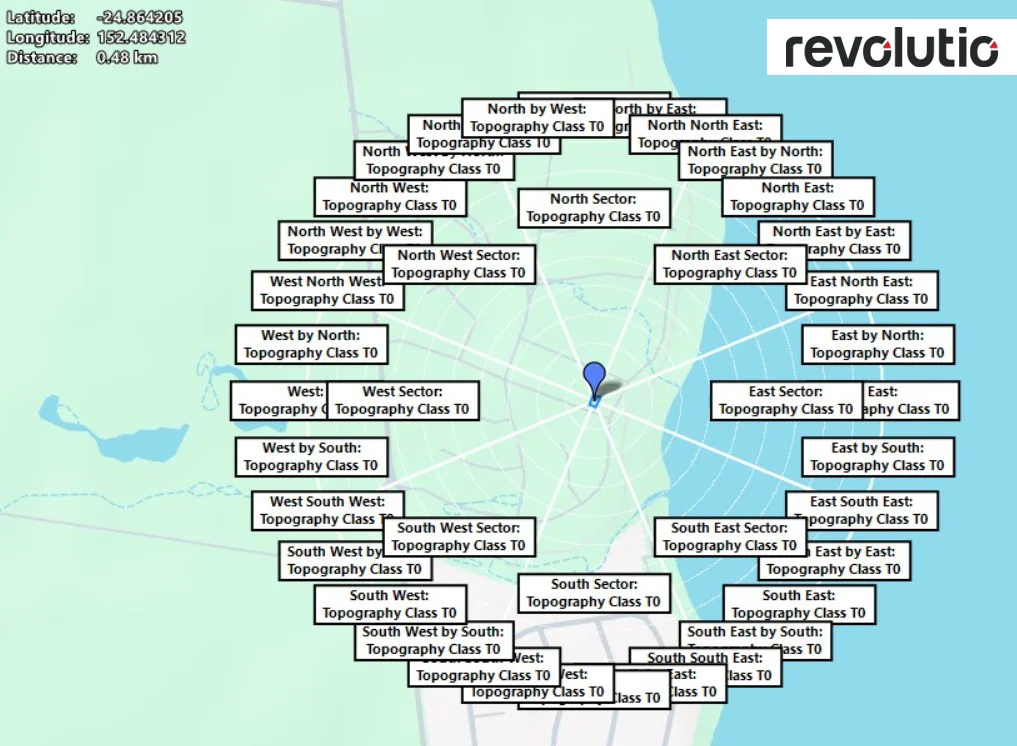
Topography for Wind Classification created and calculated using CHECKWIND by Revolutio.
Topographic Influence
The shape and slope of the land can also influence wind conditions.
AS 4055:2021 uses topographic classifications from T0 through to T5 to account for the effect of rising ground and other topographic features.
Sites located on or around elevated or sloping terrain may therefore require additional consideration when determining the appropriate wind classification.
Final Wind Classification
Once the relevant site factors have been assessed, the applicable wind classification is determined.
Depending on the wind region and site conditions, this may be an N Class, such as N1–N6, or a C Class, such as C1–C4.
Ground Drill provides the relevant classification information in a clear, builder-friendly report.
Wind Classification FAQs
What is Wind Classification?
Wind Classification is the process of determining the wind conditions applicable to a residential building site. Under AS 4055:2021, the assessment considers factors including Wind Region, Terrain Category, Shielding and Topographic influence to determine the appropriate N Class or C Class.
Why do I need a Wind Classification?
Wind Classification provides important information for structural design. The classification helps the structural engineer or designer determine the wind conditions that need to be considered when designing the building and its structural components.
Who Needs a Wind Classification?
Our Wind Classification service is suitable for:
- Builders
- Building designers
- Architects
- Structural engineers
- Owners
- Owner-builders
If you are preparing plans for a new residential building and your builder, designer, certifier or engineer requires a Wind Classification, Ground Drill can provide the assessment and report.

What are N Classes and C Classes?
N Classes are used for non-cyclonic wind conditions and C Classes are used for cyclonic wind conditions.
AS 4055:2021 includes wind classifications from N1 to N6 and C1 to C4.
What is Terrain Category?
Terrain Category describes the surrounding environment and its effect on wind conditions. AS 4055:2021 uses TC1, TC2, TC2.5 and TC3.
What is Shielding?
Shielding considers nearby buildings and other obstructions that may reduce the wind experienced at a building site. It is one of the factors considered when determining the site's Wind Classification.
What is Topographic Influence?
Topographic influence considers how the shape and slope of the surrounding land can affect wind conditions.
AS 4055:2021 uses classifications from T0 to T5.
Do I still need a Structural Engineer?
Yes. Ground Drill provides the Wind Classification information for the site. The structural engineer or appropriately qualified designer is responsible for using that information as part of the structural design.
Does Ground Drill provide AS/NZS 1170.2:2021 Wind Assessments?
No. Ground Drill provides AS 4055:2021 Wind Classification for applicable residential sites.
AS/NZS 1170.2:2021 is a broader wind-actions standard that may apply to projects outside the scope or geometric limits of AS 4055.2021.
How long does a Wind Classification take?
Our typical turnaround is 1–2 business days.
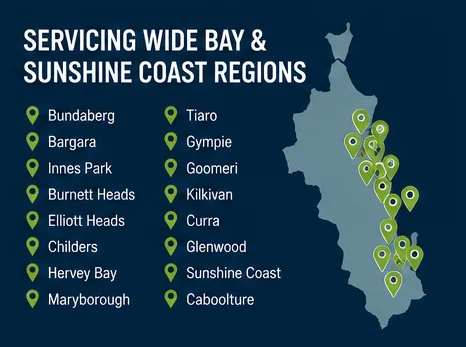
Where does Ground Drill provide Wind Classification?
We provide Wind Classification throughout Bundaberg, Bargara, Innes Park, Burnett Heads, Elliott Heads, Childers, Hervey Bay, Maryborough, Tiaro, Gympie, Goomeri, Kilkivan, Curra, Glenwood, Sunshine Coast and Caboolture, including most surrounding areas.
How do I get a quote?
You can request a quote through the Ground Drill online quoting system.